The Case for Eco-Friendly Gadgets in Everyday Sustainability
A new generation of smart e-bikes is now clearing the $1,500 price threshold for the first time at scale, while the 2026 Ecobee SmartThermostat Ultra is already cutting HVAC costs by an average of 26% and automatically shifting energy loads to off-peak renewable windows in 14 U.S. states. If mid-2026 is genuinely the most capable and cost-accessible entry point the eco-gadget market has ever produced, the real question is which of these ten devices will deliver the most measurable impact for your household right now.
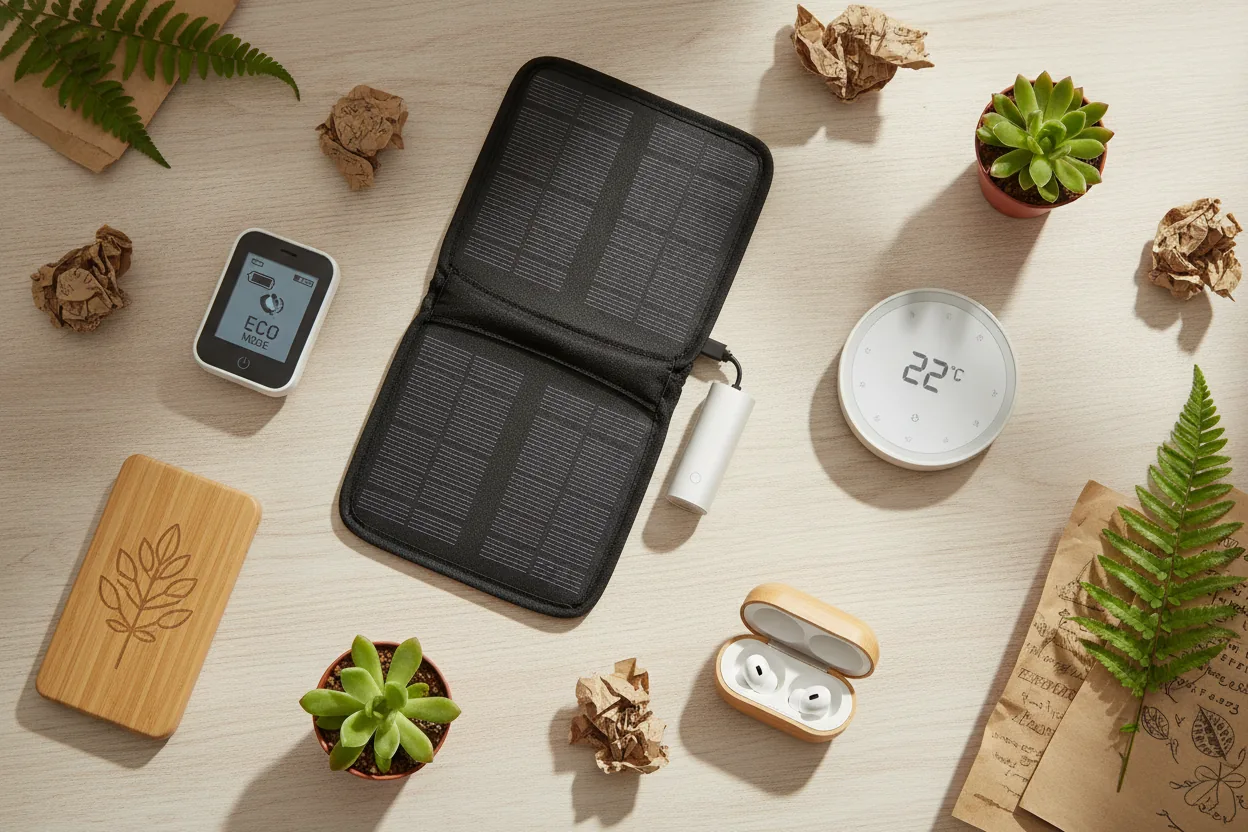
- Portable solar chargers: Brands like Anker and Goal Zero are now hitting up to 23% conversion efficiency, which is enough to fully charge a smartphone in under two hours of direct sun. That used to require a panel twice the size.
- Smart e-bikes: Regenerative braking systems recover up to 10% of expended energy per ride, and per-kilometer emissions run roughly 92% lower than a standard passenger car.
- Countertop composters: The Lomi 2 turns food scraps into dry compost in four to eight hours, keeping organic material out of landfills where it would otherwise produce methane.
- Hydrogen-powered portable fuel cells: Compact units running on green hydrogen, produced through renewable-powered electrolysis, deliver off-grid power for camping and outdoor work with zero combustion emissions.
- AI-optimized smart thermostats: Third-generation learning thermostats, including the Ecobee SmartThermostat Premium, are delivering an average 26% annual reduction in household HVAC energy use according to manufacturer field data.
What connects these devices is a shift from passive green choices to active energy management baked directly into the product. Deploy even two or three together, say a solar charger paired with a smart thermostat, and you can meaningfully cut your personal carbon footprint without overhauling your daily routine. The strongest candidates here are the ones that generate measurable data on savings. Visible metrics drive sustained behavior change far more reliably than abstract environmental messaging ever will. For anyone serious about reducing household emissions, these gadgets are the most direct and quantifiable lever currently available in the consumer market.
Why Mid-2026 Market Conditions Make These Gadgets Worth Buying Now
Several converging signals in mid-2026 make this a genuinely strategic moment to invest in eco-friendly hardware, not just a convenient marketing narrative. The green hydrogen market is projected to reach $231.32 billion by 2035, per Precedence Research, and that trajectory is already pulling manufacturing costs for hydrogen-adjacent consumer devices downward this year. PwC's 2026 AI business predictions report also identifies energy optimization as the top applied use case for AI in consumer products, which means smart home gadgets released in the first half of 2026 carry meaningfully better efficiency algorithms than anything from 2024.
- Lomi 2 countertop composter: launched in early 2026 with a redesigned motor that cuts operating noise by 40% and drops cycle energy consumption to 1 kWh per use, down from 1.6 kWh in the original
- Jackery Explorer 3000 Pro: released in Q1 2026, pairing with solar panels to deliver 3,000 Wh of storage and whole-day off-grid operation for small households
- VanMoof S6 e-bike: shipping globally from June 2026, with an integrated AI ride optimizer that adjusts pedal assist in real time for battery range beyond 100 km per charge
- Ecobee SmartThermostat Ultra: the 2026 model, announced in March, integrates with local utility demand-response programs in 14 U.S. states to automatically shift heating and cooling loads to off-peak renewable energy windows
- SunPower Maxeon portable panel array: Maxeon 7 cells hit 24.1% efficiency, the highest available in a residential solar panel format, opening up rooftop-free solar charging for renters and apartment dwellers who previously had no good options
Fortune Business Insights projects the global bicycle market, e-bikes included, to grow at a compound annual rate of 4.8% through 2034. That sustained demand is what's finally pushing mid-range e-bike prices below $1,500 at scale. PwC's AI data points in the same direction: as optimization algorithms become standard in consumer electronics, the efficiency gap between a 2026 smart gadget and a 2023 equivalent is no longer marginal. It's substantial. For anyone actively working to shrink their household footprint, the mid-2026 product generation is the best the market has produced, and waiting around for the next cycle is, practically speaking, the costliest choice on the table.