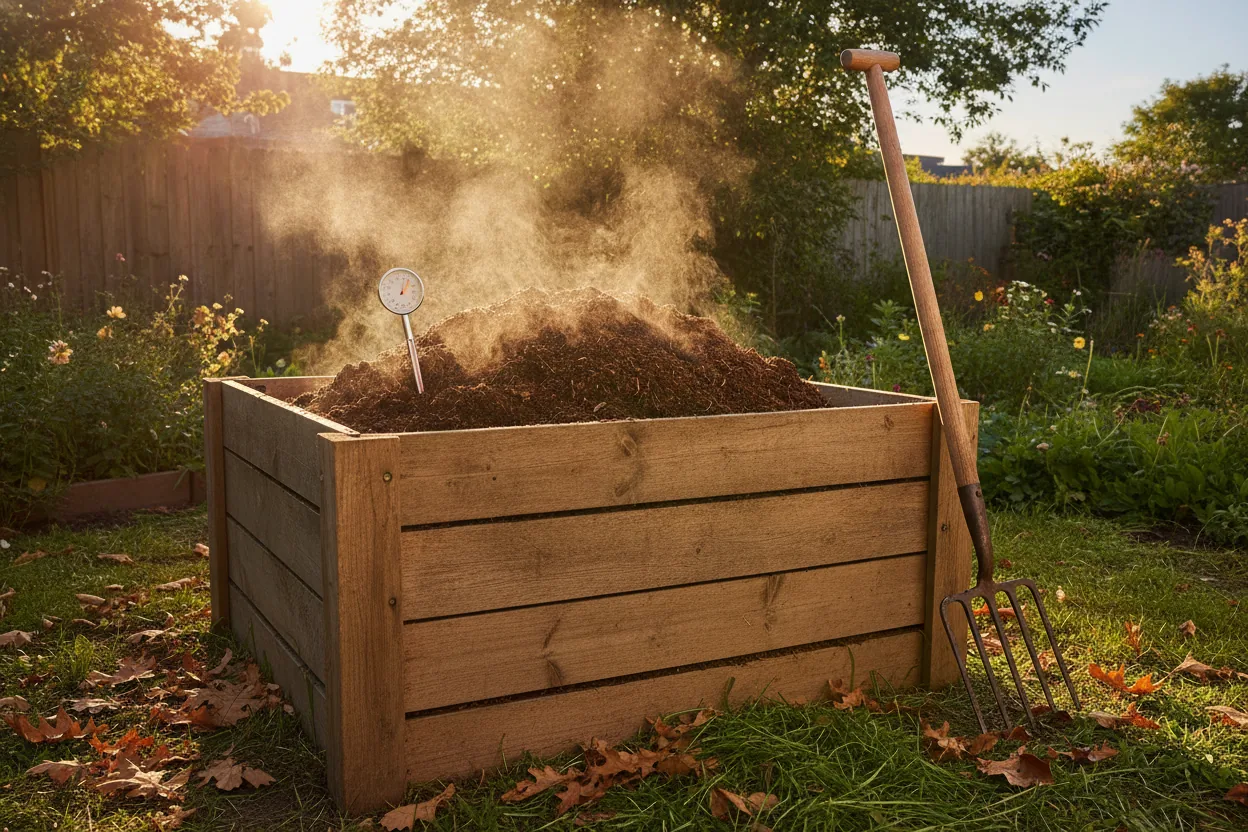
Knowing the Difference Between Passive and Hot Composting
A hot compost pile can finish in 3 to 4 weeks instead of the usual 6 to 12 months, but only if it hits 130 to 160°F internally, and ambient summer air does a lot of that heating for you before you ever pick up a thermometer. Does starting month actually decide whether you get usable compost in weeks or wait out most of the year? Depends on which of two systems you're running.
Hot composting is a managed pile that reaches 130 to 160°F internally, hot enough to kill weed seeds and most pathogens, and it finishes in 3 to 4 weeks instead of the better part of a year. The tradeoff is work: you build the pile with the right ratio of materials from the start, monitor internal temperature with a probe thermometer, and turn the pile on a set schedule to keep oxygen flowing and heat distributed. It's nothing like a set-and-forget bin.
This is why the question of best season only really applies to hot composting. A passive pile can start any month and will eventually break down, slowly, regardless of outdoor temperature. Hot composting is where timing turns into a real variable, where getting it right shrinks a multi-season project into a multi-week one. Figure out which system you're running before you start worrying about the calendar.
Starting a Hot Pile in Summer for the Fastest Turnaround
Since timing matters most for hot composting, the next question is which month gives the biggest advantage. A hot pile built in June in many parts of the US sits in warm ambient air, and that warmth does part of the work for you. A pile sitting in warm summer air reaches its 130 to 160°F internal target faster than the same pile built in cooler spring weather, because less of the microbial heat it's generating escapes into the surrounding air.
Summer yard waste comes pre-balanced in a way other seasons just don't offer. Grass clippings from regular mowing are nitrogen-rich, dried garden trimmings and spent vegetable plants supply carbon, and kitchen scraps from the peak of the growing season add moisture and more nitrogen. That's close to the exact carbon-to-nitrogen mix a hot pile needs, and you get it without hunting for extra materials or buying straw to bulk up carbon content.
The shorter 3 to 4 week turnaround in summer also means you can run multiple batches across a single growing season instead of committing to one slow pile. A gardener who starts a hot pile in early June can have finished compost by early July, start a second batch, and have more finished compost by early August, right when fall bulb planting or a late vegetable bed needs it.
If speed is the goal and you're willing to monitor temperature and turn the pile on schedule, summer is where that effort pays off fastest. Outside of summer, the same amount of work gets you slower results, simply because ambient heat is working against you instead of with you.
Matching the Season to Your Actual Goal
Summer wins on speed, but speed isn't everyone's goal, so the starting month should match what you actually need from the pile. A homeowner in Minneapolis raking an oak-leaf pile every October is sitting on a different opportunity than the summer hot-composter. That leaf pile is already breaking down on its own, passively, and the practical move is just to get the rest of your kitchen and yard waste into it or next to it, rather than waiting for spring to start fresh. Spring gives you a long runway before winter. Fall hands you abundant leaves. Summer gives you heat and balanced material at the same time.
The right starting month depends on what you're optimizing for:
- Fastest finished compost: start in June, July, or August and run it hot. This is the only path to a 3 to 4 week turnaround.
- Least effort, no monitoring: start a passive pile whenever you have material on hand, fall leaves are a common trigger, and expect 6 to 12 months.
- If you're working with what you already have, one longtime composter put it well on a Reddit composting thread: the best time to start is when the raw materials are sitting in front of you, because a half-finished leaf pile left idle is wasted decomposition time.
- Spring starters: March through May gives a pile months to mature before fall garden cleanup, useful if you want compost ready for autumn planting rather than summer harvest.
So the original question has two different answers depending on which system you choose. If you want compost on the fastest possible clock, build a hot pile in summer, keep a thermometer on hand, and commit to turning it every few days. That's the only combination that delivers finished compost in weeks rather than months. Everyone else can start whenever the materials show up, because a pile that sits and slowly breaks down is still keeping waste out of a landfill, and that's the baseline win no matter the season or the speed.