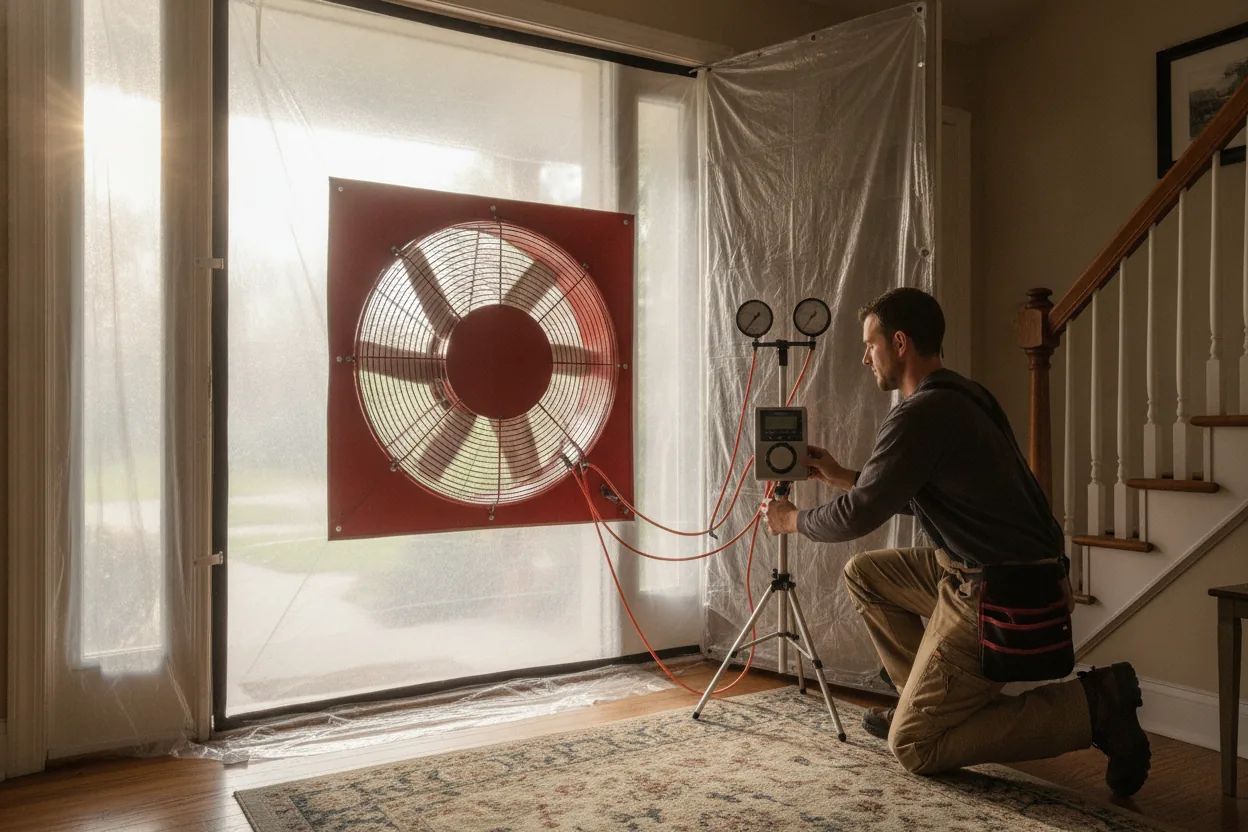
What a Home Energy Audit Actually Measures
Most homeowners planning an energy upgrade default to the fix they can see. New windows, usually. And they skip the fix that actually saves the most money. Air sealing, duct sealing, and attic insulation together tend to cost less than a window replacement in an average home and pay back faster, while window replacement often costs more and delivers less. The real question isn't whether to upgrade, it's what to buy first, and that depends on a sequence of tests most people skip before they ever call a contractor.
- Energy bill analysis comes first, comparing 12 months of utility data against similar homes to flag abnormal usage.
- Blower door testing pressurizes the house to measure total air leakage in cubic feet per minute, giving a baseline number for comparison after upgrades.
- Thermal infrared imaging locates missing or compressed insulation in attics, walls, and basements that a visual inspection alone would miss.
- Duct inspection checks HVAC distribution for leaks, disconnected sections, and improperly sized equipment. In my experience this tends to track closely with comfort complaints like hot and cold spots.
- Software load modeling is where the auditor enters a home's dimensions, volume, and existing insulation levels into a program that calculates heating and cooling load.
This sequence matters because it stops money and material from going toward the wrong fix. Replace the windows before sealing the attic bypasses, and you've spent on a lower-impact upgrade while the bigger leak stays wide open. That ordering is what determines which fixes get prioritized next.
Air Sealing and Insulation Get Prioritized First
The tests above exist to answer one question: where is the energy actually escaping. Once the blower door test and thermal imaging pin that down, auditors almost always recommend air sealing, duct sealing, and insulation before anything else. These three fixes typically cost noticeably less combined than window replacement or HVAC equipment swaps in a similarly sized home, and they fix the leaks that make every other upgrade less effective. This order comes down to return on investment, not convenience, though exact costs and payback periods vary by home and local pricing.
- Air sealing tends to cost relatively little compared to other upgrades and often pays back within a few years, among the fastest returns of any common upgrade.
- Duct sealing is a moderate expense with a typically short payback period, correcting the leaky ductwork flagged during inspection.
- Attic insulation costs more upfront than air or duct sealing but still tends to pay back faster than most window or HVAC projects.
- Air sealing and insulation together reduce heating and cooling costs more reliably than almost any other combination, which is why these two sit at the top of nearly every professional report.
- A second blower door test after the air sealing work verifies the improvement. Worth asking about before hiring, since not every auditor includes it in the base price.
Many auditors tell homeowners to start with zero-cost and low-cost steps right away: managing phantom power loads, adding weather stripping, insulating the water heater. These generate quick savings that help fund the bigger air sealing and attic insulation work down the line. Those savings set up the questions worth asking before booking the next audit.
How to Prepare for Your Next Energy Audit
Knowing the right order of fixes only helps if the audit you book actually follows it. Ask about the sequence before you ask about price. A quality audit should move from bill analysis to blower door testing to thermal imaging before any contractor-ready recommendation gets written down, and the final report should rank fixes by payback period, not list them alphabetically or by whatever's easiest to sell.
- Ask for thermal infrared images in the final report, or ask what alternative method the auditor uses, since smoke testing and manual draft-checking are far less precise.
- Ask about the test-out cost, the follow-up blower door test that confirms the air sealing actually worked. This verification step is sometimes billed separately.
- Expect a written priority list, not a verbal recommendation, with photos and payback estimates for air sealing, duct sealing, and attic insulation.
- Budget for the top three fixes based on quotes for your specific home size, then treat windows and new heating equipment as a later phase.
- Look into free or low-cost audit programs through your utility or state energy office. They can offset the diagnostic cost before you spend a dollar on upgrades.
The choice between windows and air sealing was never really a toss-up. The data from bill analysis, blower door testing, and thermal imaging points to air leaks and insulation gaps as the bigger, cheaper-to-fix problem in most homes, with equipment inefficiency a distant third. Book an audit that follows this sequence, insist on a written, payback-ranked report, and you end up spending less to use less energy, not just spending more to look upgraded.