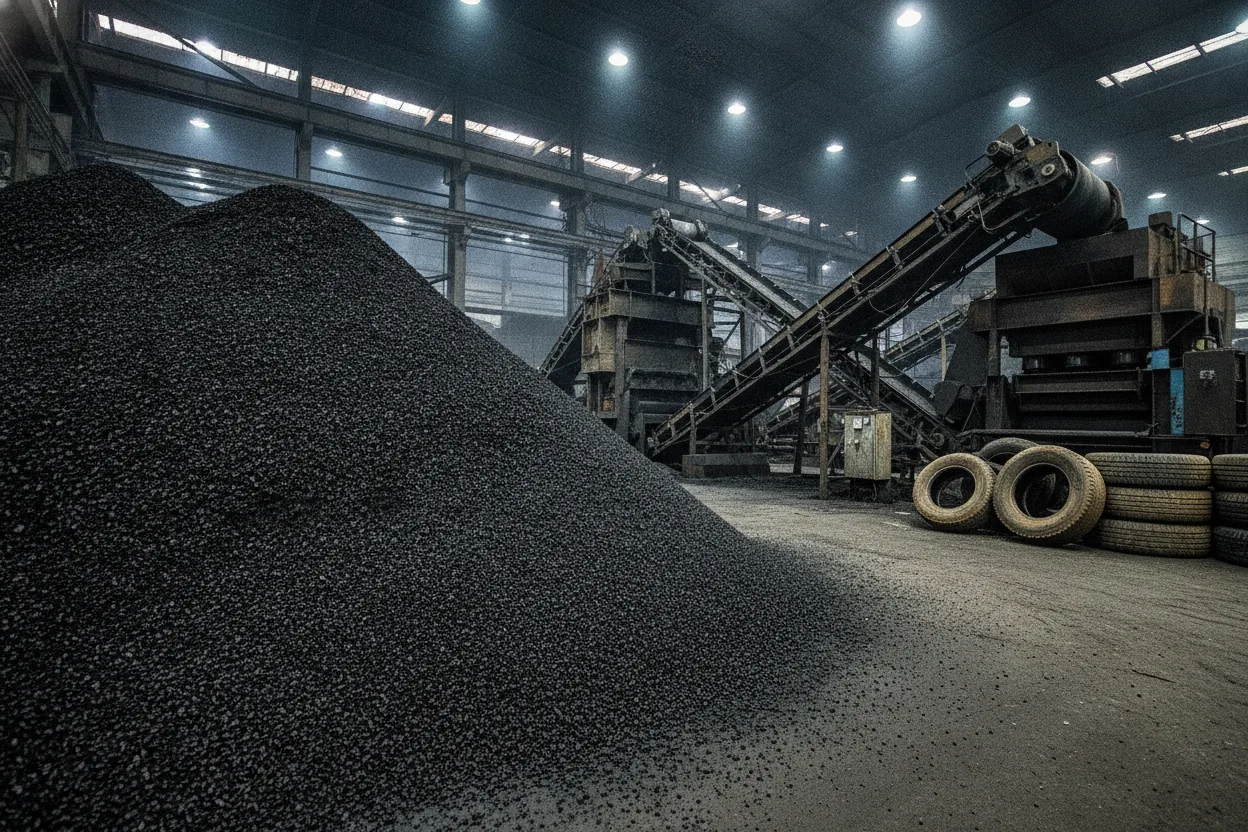
The closed-loop tyre recycling model and its sustainability potential
Europe discards millions of tonnes of waste tyres every year, and until now nearly all of that rubber has been downgraded into sports surfaces or burned for energy rather than returned to new tyres. Pirelli's July 2026 programme is the first to close that loop at continental scale, targeting 60% sustainable materials in its tyre compounds by 2030. That raises a real question for anyone shopping for premium tyres today: is this the moment to buy in and support the infrastructure, or is recycled-content rubber not yet proven enough to trust on the road?
- Natural rubber production accounts for roughly 5-7% of global tropical deforestation, so substituting virgin rubber has a direct conservation impact, not just a feel-good one.
- Synthetic rubber comes primarily from butadiene and styrene, both petrochemical by-products that carry significant carbon footprints before they ever reach a tyre factory.
- The EU's End-of-Life Vehicles Regulation, updated in 2023, is progressively tightening recycled content requirements across automotive components, tyres included.
- Chemical recycling routes like pyrolysis and devulcanisation can recover carbon black and reclaimed rubber with performance properties close enough to virgin-grade materials for high-load tyre compounds. That's the technical hurdle that's been holding this back for years, and it's finally clearing.
- Replacing just 10% of virgin rubber in a standard passenger tyre with recycled content cuts that tyre's carbon footprint by an estimated 5-8% per unit, based on lifecycle assessment benchmarks from the European Tyre and Rubber Manufacturers Association.
The whole promise of tyre-to-tyre recycling comes down to a quality threshold: once recycled rubber meets the mechanical and safety specifications of a new tyre, the entire mountain of waste tyres becomes a feedstock instead of a disposal headache. For anyone focused on sustainable mobility, that means the tyres on their car could eventually carry a meaningful share of recovered rubber with no trade-off on safety ratings or durability. Pirelli's July 2026 initiative is the clearest signal yet that this threshold is now within reach at industrial scale, not just in a lab.
Pirelli's Europe-wide circular initiative launched in July 2026
Pirelli's July 2026 initiative is Europe's largest tyre-to-tyre circular recycling programme, built for industrial volume from the start rather than as a proof-of-concept pilot. Working alongside a consortium of industrial partners, Pirelli announced the launch as reported by ChemAnalyst. The programme coordinates collection, processing, and re-integration of end-of-life tyre material across multiple European markets, positioning Pirelli's manufacturing network as both a consumer of recycled feedstock and an active driver of the upstream collection infrastructure that makes any of this work.
- The programme spans collection and reprocessing across the continent's key automotive markets, making it the largest tyre-to-tyre initiative by geographic reach.
- Pirelli's Sosteniamo sustainability framework targets an 80% reduction in absolute Scope 1 and Scope 2 emissions by 2030 against a 2018 baseline. This recycling loop plugs directly into that architecture.
- The 60% sustainable materials target for Pirelli tyre compounds by 2030 counts both recycled and bio-based content, so the programme isn't carrying the whole load, but it's a substantial piece of it.
- Consortium partners bring specialised expertise in devulcanisation chemistry and recovered carbon black processing, which have historically been the two technical bottlenecks that stopped tyre-to-tyre recycling from scaling.
- Pirelli's 18 manufacturing facilities worldwide give the initiative real downstream absorption capacity for recycled rubber inputs as processing volumes ramp up.
Building a closed loop at European scale requires simultaneous investment in collection logistics, processing technology, and manufacturing integration. The consortium model is specifically designed to tackle all three at once rather than solve one and stall on the others. So to the question raised at the outset: recycled-content rubber isn't a future option. It's an active engineering priority, backed by infrastructure already in motion. Buyers choosing Pirelli products today are, in a fairly direct sense, funding the collection and processing capacity that could make recycled rubber the default across the premium tyre market, not just one manufacturer's niche commitment.