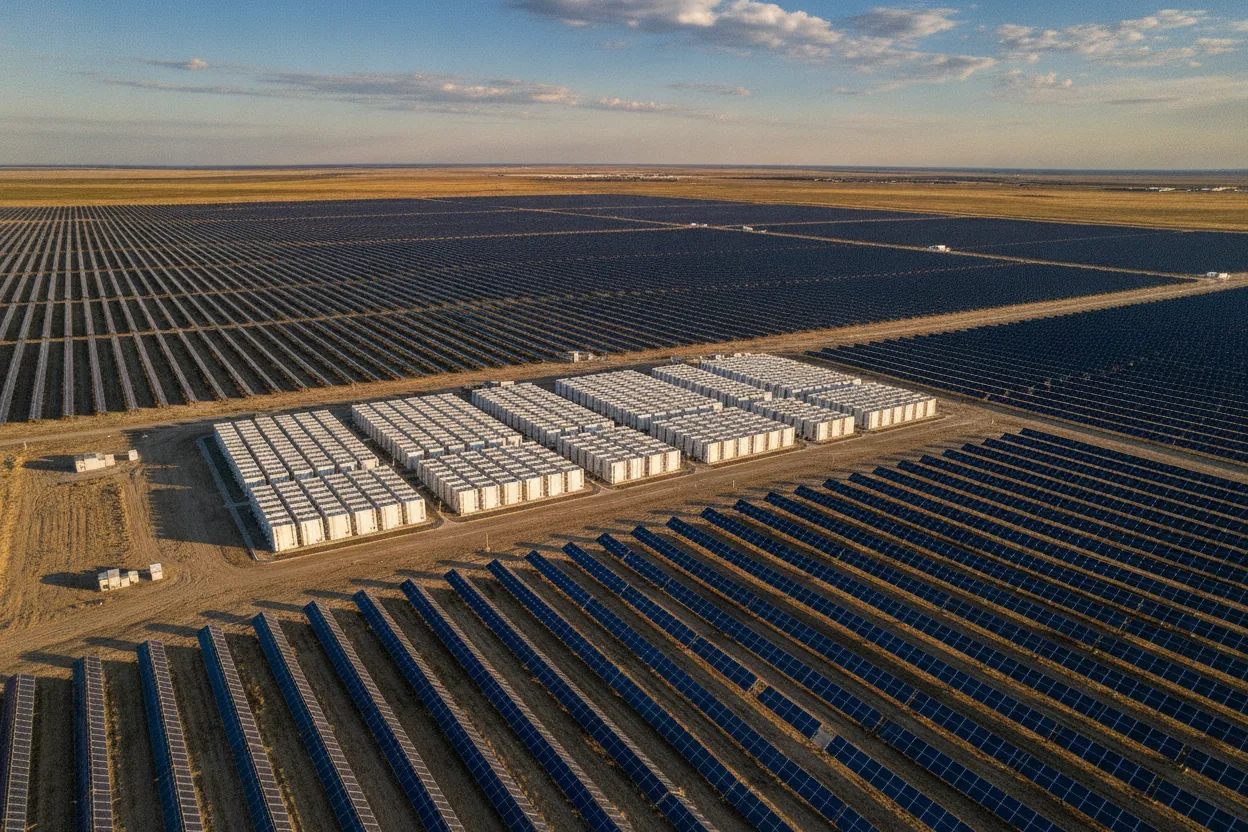
MN8 Energy and Greenbacker: Two Major Clean Energy Portfolios Combining into One Platform
MN8 Energy operates more than 3.5 gigawatts of solar and battery storage assets across the United States, and its July 23, 2026 acquisition of Greenbacker Renewable Energy Company LLC is pulling that capacity together with Greenbacker's community solar, wind, and storage portfolio into a single Goldman Sachs-backed platform. If you're weighing a community solar subscription or a commercial renewable power purchase agreement right now, the deal raises a pretty direct question: is the operator behind your contract large and financially solid enough to actually build and maintain the project on schedule?
- MN8 Energy currently operates more than 3.5 GW of solar and storage assets across multiple US states, representing significant distributed generation capacity
- Greenbacker Renewable Energy Company LLC holds a diversified portfolio spanning solar, wind, and energy storage projects, which broadens the combined entity's technology mix considerably
- The combined platform is being positioned as a top-tier American power platform, a label that reflects both installed capacity and projected development pipeline
- Battery storage integration across both portfolios addresses a core reliability problem facing distributed renewable grids in the US
- The deal accelerates access to offtake agreements and long-term power purchase contracts, which strengthens revenue visibility for commercial and community solar customers alike
Consolidation at this scale reflects a real structural shift in US clean energy. The era of fragmented independent power producers is giving way to larger, better-capitalized platforms that can finance and build projects faster than smaller operators ever could. For consumers and businesses sourcing renewable energy through community solar subscriptions or commercial power purchase agreements, that shift matters: bigger, more stable operators generally mean stronger contract security and more consistent project delivery. Operator scale deserves to sit near the top of your evaluation checklist, because financial backing and installed capacity now directly determine whether projects get built and maintained on time.
The MN8 and Greenbacker Acquisition Announcement Driving Clean Energy Industry Attention in July 2026
The acquisition places Greenbacker's community solar subscribers and commercial offtakers inside a significantly larger, Goldman Sachs-backed operator, which improves long-term project continuity across every connected contract. MN8 Energy announced the definitive agreement to acquire Greenbacker Renewable Energy Company LLC on July 22, 2026, with the announcement distributed through Business Wire. Both organizations had built substantial US renewable footprints independently before this, and the combined entity is being described by both parties as a vehicle for accelerated clean energy deployment across American markets. That framing isn't just corporate boilerplate here. US electricity demand is climbing sharply due to data center growth, industrial reshoring, and the ongoing electrification of buildings and transportation, which makes large-scale renewable operators with ready capacity look a lot more like critical infrastructure than they did five years ago.
- The acquisition was formally announced on July 23, 2026, marking a significant consolidation event in the independent power producer sector
- MN8 Energy (formerly Goldman Sachs Renewable Power LLC) was spun off from Goldman Sachs Asset Management to become an independent renewable power company, with backing from investors including Ridgewood Infrastructure and Mercuria Energy , giving the combined platform serious institutional firepower for future capital deployment
- Greenbacker's portfolio includes projects across community solar programs, which deliver bill savings directly to residential subscribers who can't install rooftop panels
- Assets spanning multiple US states reduce concentration risk and improve grid resilience across different regional energy markets
- Surging US electricity demand from AI data centers and industrial electrification is creating urgent need for exactly the kind of large-scale clean capacity this merger is designed to deliver
Deals like this one show where institutional capital is actually going in 2026: toward scaled, vertically integrated renewable platforms capable of meeting the electricity demand surge without leaning on fossil fuel peaker plants to fill the gap. If you're actively evaluating community solar subscriptions or commercial renewable energy contracts, pay close attention to who owns and operates the projects behind those agreements. Operator scale and financial backing now have a direct line to delivery reliability. That's not a minor detail buried in the contract. It's the whole ballgame.