What causes tap water to taste different across the year
Geosmin, the compound behind musty-tasting summer tap water, shows up on the human tongue at concentrations so low they're almost absurd to think about, which is why the same faucet can taste fine in March and off in August with nothing wrong safety-wise. The cause is seasonal chemistry, not a broken filter. So which fix actually deals with that, instead of just covering it up for a month?
- Geosmin and 2-methylisoborneol (MIB): two compounds produced by algae and bacteria in source water. Humans can pick up on these at vanishingly small amounts, which is part of why the taste complaints spike even when everything else checks out.
- Spring runoff: snowmelt and rain wash sediment, organic matter, and nutrients into rivers and reservoirs, changing turbidity and taste.
- Summer algae blooms: warmer water speeds up algae growth, and that's usually the main driver behind the earthy, musty smell people complain about in July and August.
- Mineral concentration shifts: calcium, magnesium, sodium, and bicarbonates naturally fluctuate by season and by location, altering mouthfeel and perceived hardness.
- Treatment adjustments: utilities change disinfectant dosing or filtration steps during droughts or algae events, and that adjustment itself can introduce a new taste.
None of these shifts mean the water is unsafe. They mean the water reflects whatever is happening in that watershed's biology and chemistry right now, which is exactly why treatment plants keep tweaking their process instead of running one fixed recipe all year long.
Can water leaving the treatment plant still pick up bad taste later
The seasonal changes above explain why water tastes different at the plant. But that's not the whole story. Water that tastes clean leaving the treatment plant can still pick up new flavors on the way to your kitchen faucet. Between the plant and your glass sits a chain of municipal mains, service lines, household plumbing, fixtures, and often a water heater, and every one of those segments is a chance for the taste to shift again.
- Municipal pipes: aging cast iron or steel mains can add metallic notes, especially after seasonal pressure changes or repairs.
- Service lines: the connection from the main to a building can be decades older than the treatment process itself.
- Household plumbing: copper or older pipe materials react differently depending on the water's mineral content that season.
- Stagnation: water sitting in pipes overnight, or during slow periods at a vacation home or summer office, tends to taste flatter or metallic.
- Water heaters: sediment builds up inside tanks at different rates depending on usage, and that buildup shows up specifically in hot water taste.
This is also why travel makes the taste differences so obvious. A new city means a new source, a new treatment process, different minerals, and unfamiliar plumbing, all stacked on top of each other in one glass.
The practical response to seasonal water taste changes
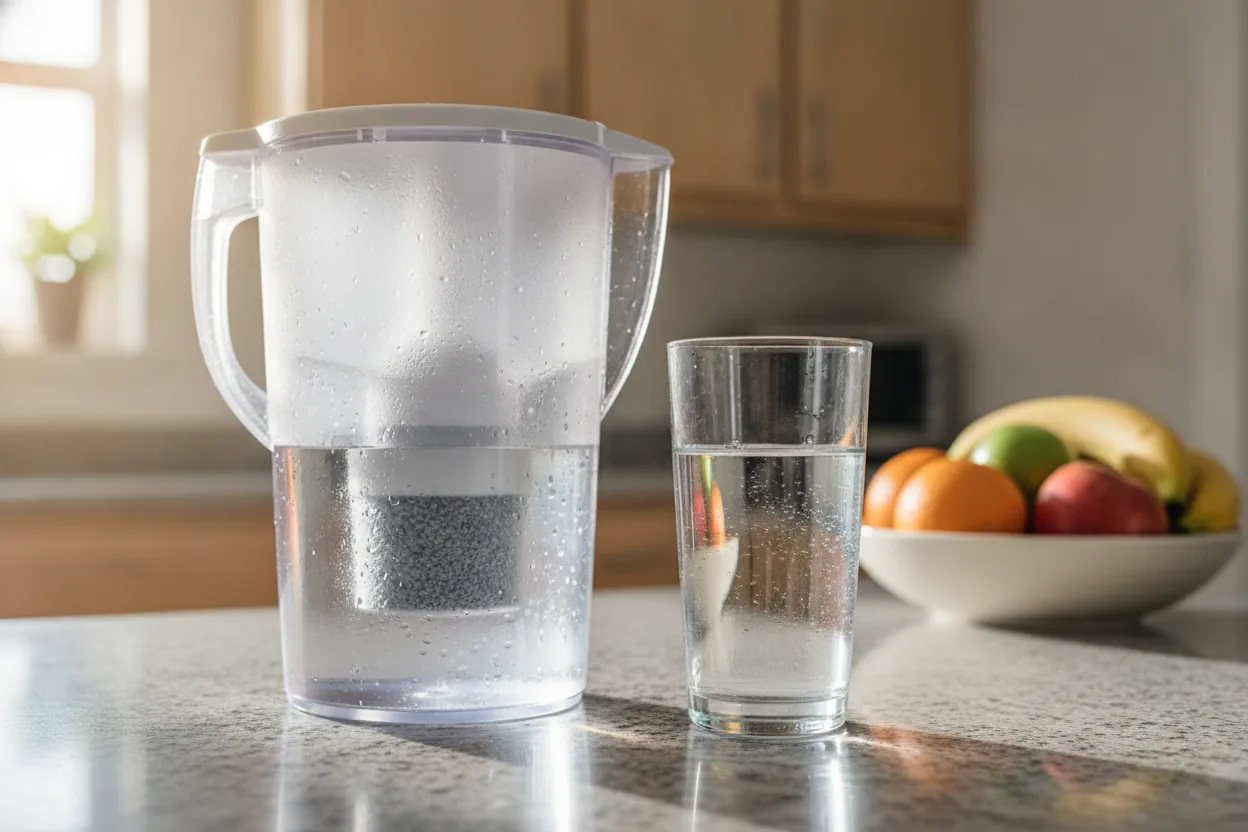
Between seasonal source chemistry and the pipes water travels through afterward, you're dealing with several overlapping causes, not one clean culprit. That's exactly why chasing each fluctuation individually is the wrong approach. Filter consistently instead: a filter addresses the overlapping causes at once, rather than fighting one variable at a time. A basic activated carbon filter, whether it's a pitcher, a faucet attachment, or a portable pod, cuts down geosmin, MIB, chlorine taste, and most of the metallic notes that come from plumbing.
- GOpure Pod: a portable purification product that, according to GOpure's own marketing, is built to smooth out taste inconsistency across locations and seasons.
- Pitcher filters: good against chlorine taste and some organic compounds. Solid choice for home tap water that shifts by season.
- Faucet-mounted filters: convenient if you're noticing that hot-weather algae taste and don't want to touch your plumbing.
- Refrigerator filters: people forget about these, but they lose effectiveness over time, and that decline often lands right in the middle of summer algae season, exactly when the flavor load they need to handle goes up.
- Letting the tap run: free, no equipment needed, and it clears out the stagnant water sitting in your pipes after a stretch of low use.
None of this requires bottled water, which drags along its own plastic waste and transport footprint for a problem a reusable filter already solves at the tap. If your water tastes different this month than it did in March, the cause isn't a broken filter or unsafe water. It's the seasonal shift in source chemistry and pipe conditions described above, and the fix is the same filter doing its job consistently, not a new product for every season.