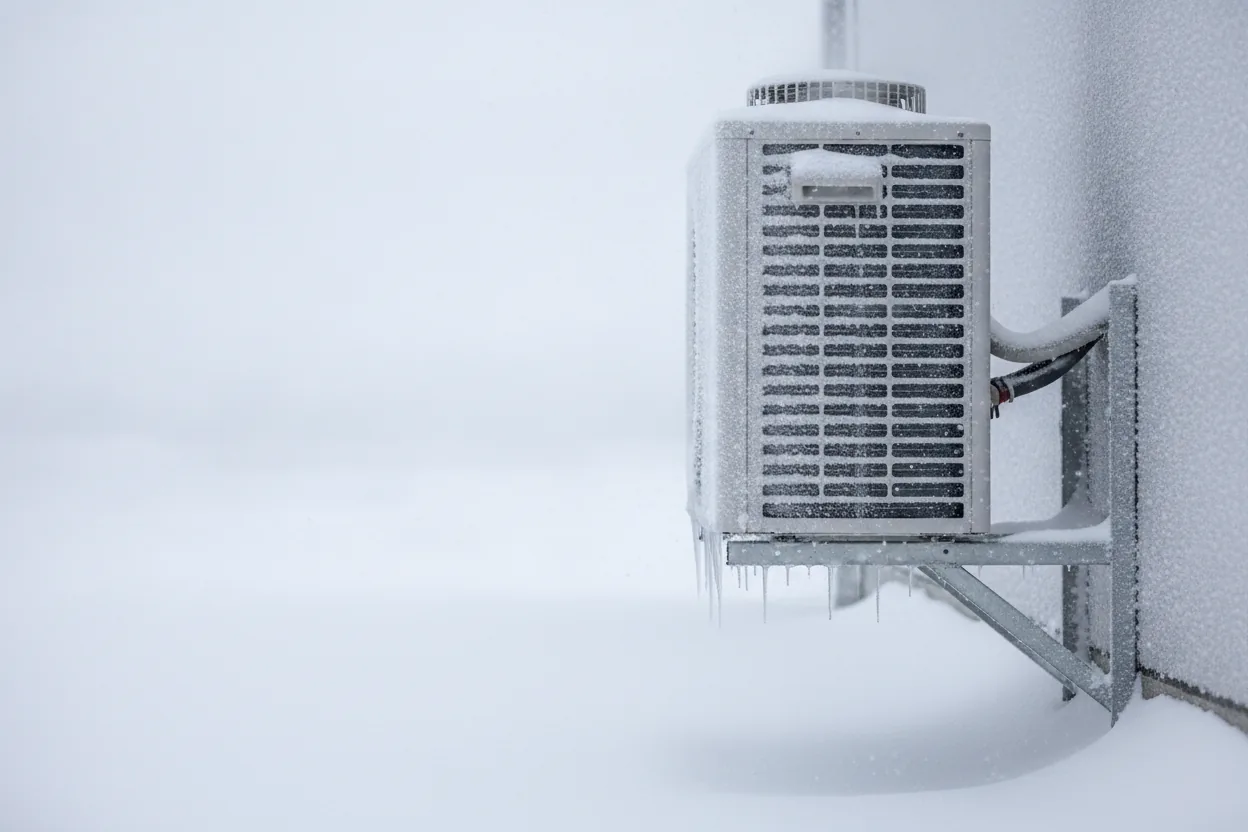
What Makes Heat Pumps Lose Efficiency in the Cold
Standard heat pumps start losing steam near 40°F and can struggle badly once it hits freezing. Cold climate models, on the other hand, are engineered to keep delivering efficient heat all the way down to -15°F to -22°F. So the old assumption about heat pumps quitting in a real winter is outdated. What actually separates a shopping mistake from a system built to outlast the coldest night of the year?
- Efficiency starts declining near 5°C (40°F), based on refrigerant phase-change behavior.
- Older heat pump models see meaningful efficiency loss below 32°F (0°C), according to Carrier's technical documentation.
- Frost builds up on the outdoor coil at very low temperatures, forcing periodic defrost cycles.
- Backup heat strips kick in when the system can't keep pace, and they're far less efficient than the heat pump itself, per BCEC's explanation of auxiliary heat.
- Electrical power draw actually increases even as heating capacity drops, according to the same source.
This isn't a design flaw. It's a physical limit: transferring heat gets harder as the temperature differential grows. Anyone shopping for a heat pump in a genuinely cold climate needs to know this threshold exists before judging the technology by one bad winter week. That threshold is exactly what engineers targeted when they built the next generation of cold climate units.
Why Cold Climate Heat Pumps Change the Calculation
Cold climate heat pumps (CCHPs) are engineered specifically to keep working well past the point where standard units struggle, and the workaround is already commercially available. Carrier states that modern cold climate models are designed to operate efficiently down to -15°F to -22°F, a dramatic expansion compared to older units that faltered right around freezing. That shift moves heat pumps from a shoulder-season appliance to a viable primary heating system in genuinely harsh winters.
- Advanced inverter compressor technology maintains heating capacity at -15°F to -22°F, per Carrier.
- Flash-injection compressor modes push refrigerant harder in extreme cold, with only a modest efficiency dip, according to HVAC technical explainers.
- Even during flash-injection operation, these units still beat electric-resistance heaters and fuel-fired systems on efficiency.
- Industry guidance for cold-climate homeowners generally treats professional installation as important for performance in extreme cold.
- Homeowners can add supplemental electric heaters for extra margin, though that raises upfront cost and electricity use.
For homeowners in regions where gas or fuel oil still dominates heating, this is the detail that actually settles the debate: a cold climate heat pump isn't a compromise product. Engineers built it specifically for the conditions that used to disqualify heat pumps altogether. The real question was never whether heat pumps quit in real winters, it's whether the unit in question was built for one. A standard heat pump losing capacity at 40°F and a cold climate model holding steady at -15°F to -22°F aren't the same appliance wearing different labels. They're different tools for different jobs, and the spec sheet, not last winter's headlines, tells you which one is sitting in your basement.