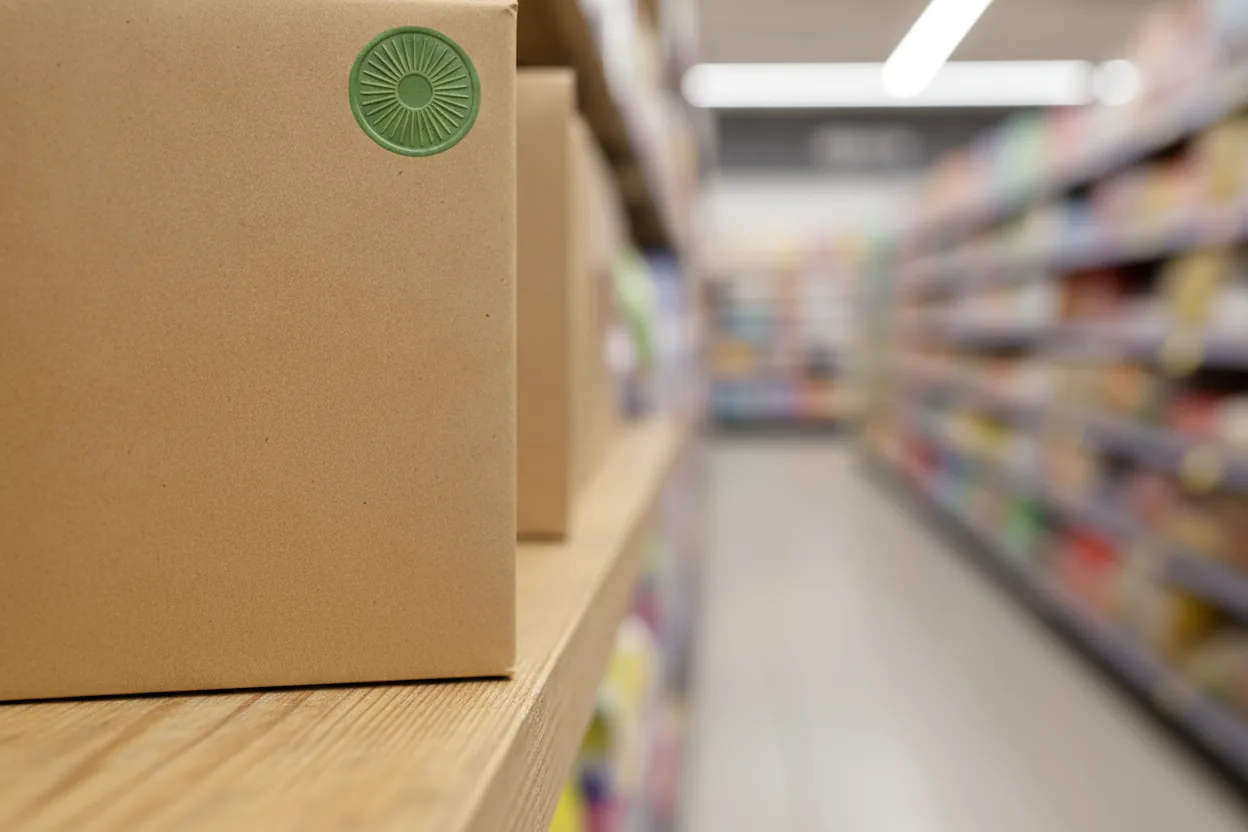
What a carbon neutral label actually certifies
That green sunburst icon on the package usually means a company paid to cancel out its pollution, not that it actually cut any of it. The EU is now banning carbon neutral claims built on offsets alone. So which brands on your shopping list are quietly funding real reductions, and which ones are just buying their way to a zero?
- Companies seeking Climate Neutral Certified status estimate their footprint using a Brand Emissions Estimator, a faster and cheaper alternative to a full consulting audit.
- Once certified, brands have to purchase offsets covering their entire prior year's carbon output.
- Reports trace the certification back to a Peak Design cofounder, who reportedly started it around 2017 after hiring consultants to map his own company's footprint
- Cradle-to-gate limitation
- The calculations skip the use phase and end-of-life disposal, which understates a product's true footprint significantly
- The intended standard: a verified label showing a company taking responsibility for its full supply chain, not just its factory gate
The certification process forces companies to measure something most had never quantified before, and that part is genuine progress. But measurement plus offsetting is not the same as a lower footprint, and that gap is exactly where most consumer confusion starts. If you want to reward real emissions cuts and not just paperwork, look past the label itself and check whether the brand discloses actual reduction data alongside its offset purchases. Measured but not necessarily reduced: that's exactly what regulators have started to target.
Why the EU is banning offset-based neutral claims
The EU's Green Claims and Empowering Consumers for the Green Transition (ECGT) Directive flatly prohibits calling a product carbon neutral, climate neutral, or CO2 neutral if that claim rests on offsetting rather than actual reductions inside the value chain. Any claim describing a neutral, reduced, or positive greenhouse gas impact based on credits is banned outright under the directive.
- Under ECGT, a product can only be labeled carbon neutral if lifecycle emissions are reduced to zero or near zero, not merely offset.
- Brands can still advertise a reduced carbon footprint, but only if that reduction happened within their own supply chain.
- The directive takes direct aim at product-level "climate neutral" seals built on purchased carbon credits.
- Carbon Trust's reduction claim label is emerging as the likely replacement model, showing year-on-year footprint reductions backed by a validated reduction plan and covering a full cradle-to-grave scope
- Brands now face a simple choice: make real cuts in their own supply chain, or drop the neutral claim entirely.
Any brand still selling a carbon neutral product in the EU market is running against a closing window: offsets alone will no longer justify the label. That's the answer to the question this post opened with. Trust the brands publishing year-on-year reduction data instead of a green sunburst icon, and stay skeptical of the ones still leaning on offsets alone, because they're the ones running out of road. Next time a carbon neutral claim shows up on a price tag, that's the test to apply.